


Serengeti National Park
Nature's Broadway, On Repeat All Year
The Serengeti is like nature’s version of Broadway — always in season, always a show. Big cats? Check. Massive herds? Absolutely. Sunsets that make your phone run out of storage? Definitely.
The name Serengeti comes from the Maasai word Siringet, meaning “the place where the land runs on forever” — and trust us, it really feels that way. Its grassy plains, woodlands, and riverine forests stretch across an area almost half the size of Belgium. But instead of traffic jams and roundabouts, you’ll find wildebeest, zebras, and gazelles moving in an endless loop known as the Great Migration.
Following them are lions, leopards, and cheetahs, scanning the horizon from the plains, the trees, or rocky kopjes like patient theatre critics, waiting for the perfect moment to strike.
Travel Tips
-
Don’t rush it. The Serengeti isn’t just about ticking animals off a list — it’s about slowing down, breathing in the vastness, and letting nature put on its daily performance.
-
Bring layers — it can be chilly in the mornings and evenings, even in the dry season.
-
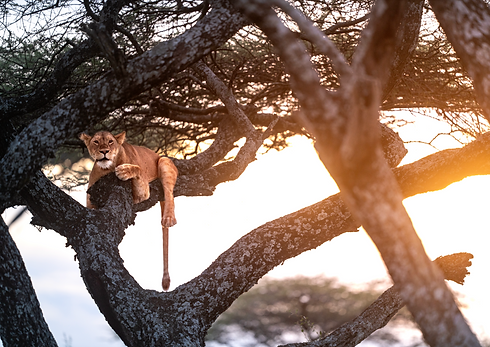
Keep your eyes peeled — you might just spot a lion lounging in a tree or surveying its kingdom from a kopje (real-life Lion King moment!).
-
Given its size, plan at least two nights — imagine exploring a Belgian province, but with elephants.
What to Do
-
Game drives — morning, afternoon, or full-day adventures.
-
Hot-air balloon safari at sunrise for a perspective like no other.
-
Bush picnics & sundowners with endless horizons.
-
Photography safaris — double your memory cards.
-
Walking safaris — back to the most purest form of safari. Meeting animals on their terms as a participant in their world brings a totally new way of understanding your surroundings.
When to Visit
The Serengeti has something incredible happening all year, but the migration steals the show:
-
December–April: The herds move between the southern and central Serengeti, with January–February as calving season in Ndutu, close to the Ngorongoro border.
-
May–July: The animals head west, with dramatic Grumeti River crossings.
-
August–September: The migration moves to the north, with the famous Mara River crossings close to the Kenya border.
-
October–November: The herds seek refuge in the remote parts of the east.
If you want to witness the migration, just let us know — we’ll tailor your trip around it from the moment you book. The migration moves on its own schedule, not according to what the internet says. Our guides are on the ground and know exactly where the herds are, and we can even adjust your safari itinerary along the way to make sure you don’t miss this incredible spectacle.