


Saving Wildlife in Tanzania: Inside Key Conservation Projects

When we think of safaris, we often picture lions roaring on the plains or elephants silhouetted against the sunset. But behind the scenes, there’s another side to the story. Not all wildlife stories are told through photos — some are written quietly in the field, by the people working every day to protect species most at risk. These are some of the wildlife conservation projects that keep Tanzania’s wild heart beating.
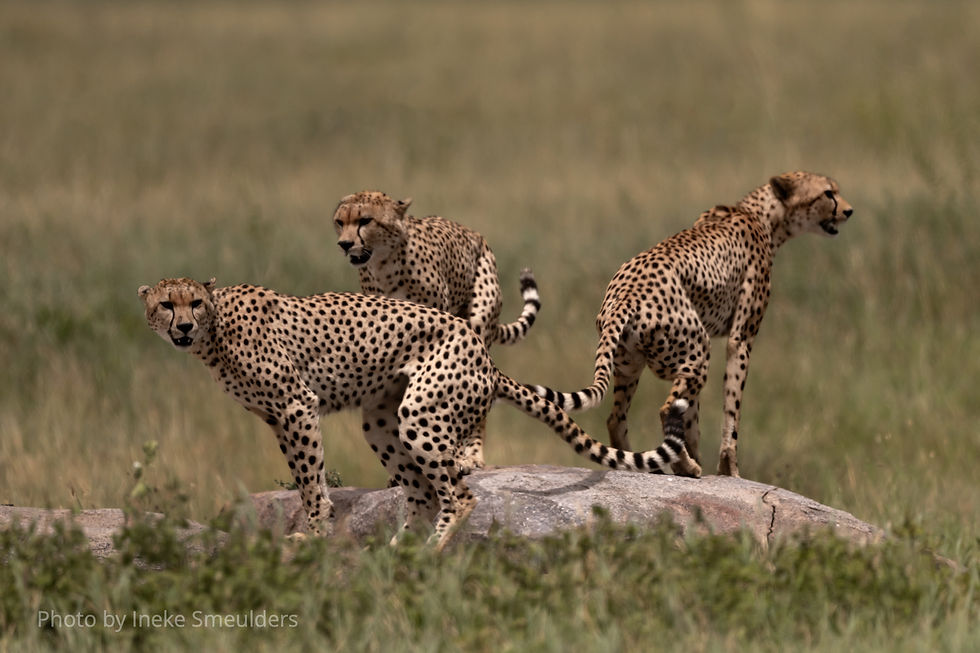
Protecting the speedsters: The Serengeti Cheetah Project
Cheetahs may be fast, but their numbers aren’t keeping pace with the challenges they face. In the Serengeti, researchers dedicate their days to tracking individual cheetahs, documenting family lines, and understanding their movements. Every spotted coat tells a story, and this research helps protect one of Africa’s most iconic predators. With this knowledge, conservationists can estimate and monitor population size, push for better protection of habitats and ensure that the children of our children will still have the thrill of seeing cheetahs in the wild.
You can help them too by sending your Serengeti cheetah photos to kelvin.munisi@ioz.ac.uk.

A safe haven: The Rhino Sanctuary in Mkomazi
Black rhinos once roamed across much of Africa, but today, they’re one of the most endangered species on the continent. In Mkomazi National Park, a dedicated sanctuary has been created just for them. Here, around-the-clock protection keeps poachers away, while careful breeding efforts give this ancient species a fighting chance. Driving through the sanctuary, you can feel the hope that comes with every calf born — proof that conservation works when we commit to it.

Restoring the elusive: The African Wild Dog Project
Few animals are as misunderstood or as elusive as the African wild dog. With their striking coats and strong social bonds, they’re one of Africa’s most fascinating predators — but also one of the most endangered. In Mkomazi, conservationists work tirelessly to breed wild dogs and release them into safe, protected areas. It’s a careful process, but each release is a step toward rebuilding their numbers and returning balance to the ecosystems where they belong.
Why wildlife conservation in Tanzania matters
These projects remind us of something important: the wild doesn’t just survive on its own — it thrives when people care enough to step in and protect it. Every cheetah recorded, every rhino guarded, every wild dog released is a small victory in a much bigger story.
And as travelers, by visiting Tanzania responsibly, we get to be part of that story too.
Want to take a closer look at or experience one of these wildlife conservation projects?
If you’re inspired by the people working tirelessly to protect Tanzania’s wildlife, why not see or experience it for yourself — responsibly and meaningfully?
With ReWild Away, we’ll help you craft a safari that’s more than just sightings: you’ll see the animals in their natural habitat, learn about the conservation efforts on the ground, and experience the wild in a way that truly connects you to the heart of this incredible country.
Our expert guides know the hidden corners, the stories behind each project, and how to make every moment feel personal — and who knows, along the way, they might just become friends.


