


Climbing Ol Doinyo Lengai: A Once-in-a-Lifetime Hiking Adventure

Updated: Oct 3, 2025
If you’ve ever dreamed of standing on top of an active volcano, looking out over a surreal, otherworldly landscape, then Ol Doinyo Lengai, standing tall at 2,962m (9,718 ft) in northern Tanzania, should definitely be on your radar. Nicknamed the “Mountain of God” by the local Maasai, this volcano is the only one in the world that erupts natrocarbonatite lava—a rare, almost chalky black lava that moves in ways you don’t see anywhere else.
A unique setting: Lake Natron and the surrounding area
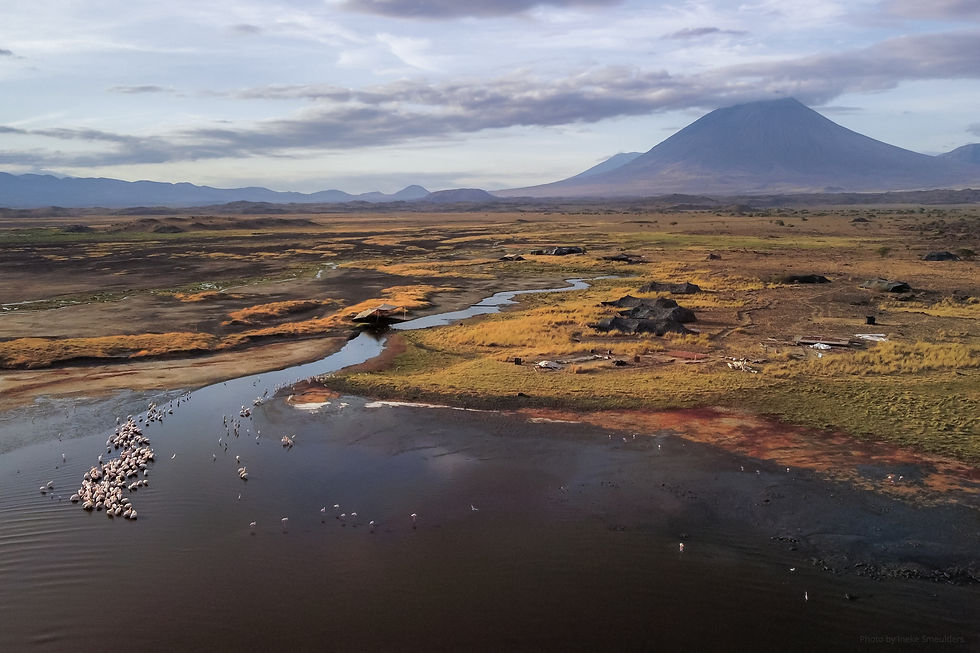
The approach to Ol Doinyo Lengai takes you through the breathtaking region around Lake Natron. This area feels like stepping onto another planet: flamingos wade through the alkaline waters, massive soda ash flats stretch for miles, the Rift Valley Escarpment towering above it all, and the reddish volcanic soil gives everything a surreal glow, especially at sunrise and sunset.
You’ll notice that it’s incredibly remote, which adds to the magic—but also means that logistics and preparation are key.
The lava that makes Lengai one of a kind
One of the things that makes Ol Doinyo Lengai truly unique is its lava. Unlike the fiery red lava you might picture from documentaries, Lengai’s lava is black when it first flows. That’s because it’s made of natrocarbonatite, a rare type of lava found only here. It’s cooler than “normal” lava (relatively speaking!) and it hardens quickly, which is why it looks so dark. But give it a little time and sunlight, and it transforms—turning from black to a chalky white as it reacts with the moisture in the air. So when you look at the slopes of Lengai, those white streaks and patches aren’t snow or ash; they’re the lava flows, frozen in time, creating the mountain’s otherworldly look.

The "Mountain of God"
Ol Doinyo Lengai isn’t just a geological wonder—it’s also deeply spiritual. In the Maasai language, Ol Doinyo Lengai literally means “Mountain of God.”
For the Maasai people who live around its base, the volcano holds sacred significance. They believe it is the home of their god, Ngai, who is both a giver of blessings like rain and fertility, and a bringer of hardship like drought. When Lengai erupts, many Maasai interpret it as a direct sign from Ngai—an expression of his power and presence. Hiking up its slopes means you’re climbing a mountain that carries centuries of stories, traditions, and reverence.
Climbing Ol Doinyo Lengai: not for the faint of heart
Now, let’s talk about the climb itself. Full disclosure: this is challenging. Both physically and mentally. Every step is a test of endurance.
The path zigzags over loose volcanic rock and ash, sometimes so soft that your boots sink in, and higher up it opens onto steep, rocky terrain that, when bathed in sunlight, can look so daunting that pausing to take it all in might make you question whether to keep going. (That and the heat during the day is why you’ll climb at night.)

We set off late in the evening, around 11 PM, so we can reach the summit just in time for sunrise. From the very first step, it’s an unrelenting ascent—there are no flat stretches to catch your breath, just the steady climb under the stars. Your guide, an expert in reading the terrain, will pace you carefully, but trust me, it’s physically and mentally demanding every single step. There will be moments when you want to stop, take a deep breath, and maybe even question why you signed up for this adventure.
The sunrise, if the clouds clear, is absolutely magical—a reward unlike any other, with the lake and the otherworldly surrounding landscapes bathed in golden light.

But the challenge isn’t over once you reach the top. The descent, right after sunrise, can be even tougher. The heat of the day starts to build, loose volcanic ash and rocks make slipping easy, and you’ll often find yourself sliding a few steps at a time. Yet there’s a rhythm to it: you learn to lean back, trust your footing, and even find a strange thrill in safely gliding down sections of the slope.
The reward: views like no other
All the effort pays off when you finally reach the summit. If the clouds cooperate, the panorama is absolutely jaw-dropping. You’ll see Lake Natron spread out like a shimmering mirror below, the escarpments of the Great Rift Valley surrounding you, and the plains stretching to the horizon. The contrast of the black volcanic rock against the pink and red salt flats is something you’ll remember forever. Even the smell of the sulfur in the air somehow adds to the experience—it’s wild, raw, and unforgettable.

Tips and takeaways
Physical prep matters: Even if you’re in good shape, some training beforehand helps. Lung capacity and leg strength really make a difference.
Bring layers: During the night temperatures drop low, and the summit can be windy. At the same time, the sun hits hard once it rises.
Sunscreen, a hat and sunglasses are a must for the descent.
Footwear: Good hiking boots with ankle support are essential. You’ll be grateful for every sturdy step.
Food & drinks: Take at least 3L of water per person, you’ll thank us later, and extra snacks with protein, such as boiled eggs, chicken, almonds, and protein bars. Bananas are always a good idea too!
Mental preparation: This climb tests patience and mental grit. Celebrate small milestones on the way up.
Photography: If you’re into photos, you’ll find countless surreal compositions—the lake, flamingos, ash trails, and the rugged volcano itself. Just make sure your camera is secure, especially on the descent! For the volcano we’d recommend a wide angle, preferably a 15-35mm. For the surroundings, you might want to bring a telelens of at least 100 or 200mm. Though, also consider the extra weight you’ll be carrying so it might be a good idea to just enjoy, take it all in and snap some shots with your phone instead.

Climbing Ol Doinyo Lengai isn’t a casual hike—it’s an adventure that challenges your body, mind, and spirit. But the reward is that feeling when you reach the top, breathe in that fresh, sulfur-tinged air, and realize you’re standing in one of the most unique places on Earth. It’s exhausting, exhilarating, and entirely worth every sweaty, careful step.
Dreaming of an adventure in Tanzania?
Whether it’s conquering the slopes of Ol Doinyo Lengai, capturing wildlife in its natural habitat, or simply immersing yourself in vast, untouched landscapes—it’s all possible.
At ReWild Away, it’s never about one-size-fits-all. We create journeys that truly reflect who you are and what you’re looking for, so your safari becomes an experience you’ll carry with you long after you return home.
If you feel the spark of adventure calling, just reach out. We’d love to share more and help you imagine what your own journey could look like.


